A Short Visit, Long Shadows: Decoding the Strategic Impact of the UAE President’s India Trip
The UAE President’s short but high-impact visit to India underscores a deepening strategic partnership that goes well beyond diplomacy. Anchored in the India–UAE Comprehensive Economic Partnership Agreement (CEPA), the visit sets an ambitious roadmap to double bilateral trade to USD 200 billion by 2032, with a strong focus on MSME linkages, digital trade corridors, and infrastructure-led growth. Key outcomes include a long-term LNG supply agreement strengthening India’s energy security, expanded defence and counter-terrorism cooperation, and growing collaboration in advanced technologies such as AI, space, supercomputing, and civil nuclear energy. Against a backdrop of shifting West Asian geopolitics, the visit signals strong strategic alignment, mutual trust, and a shared vision for regional stability, economic integration, and global leadership—reinforced by deep cultural and people-to-people ties.
 P3Publications
0
214
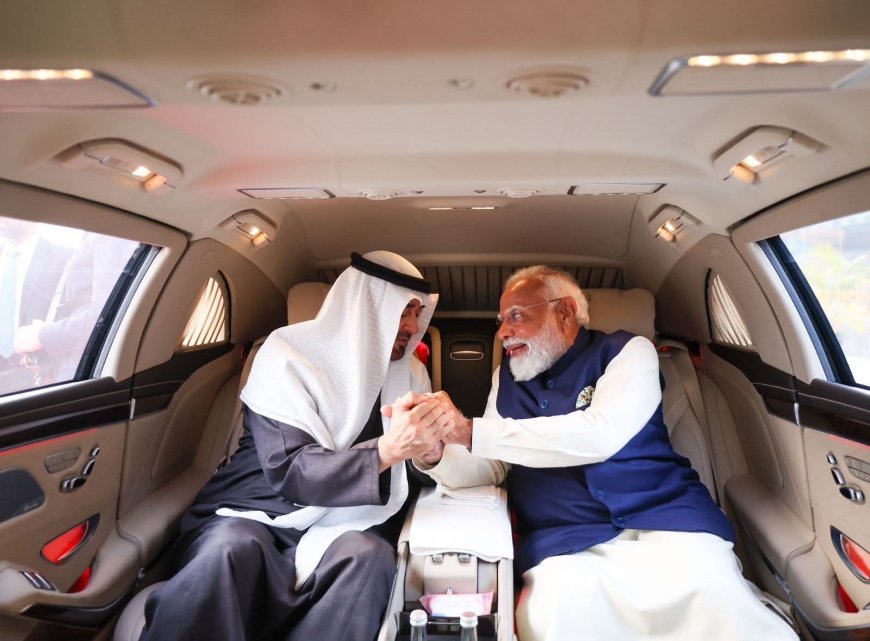
The UAE President is in India and the strategic rationale behind this short but high-impact visit is important and path breaking:
The visit builds on the Comprehensive Economic Partnership Agreement (CEPA) and aims to expand economic cooperation and trade.
Both sides set an ambitious target to double bilateral trade to US $200 billion by 2032.
There’s a focus on connecting MSMEs, launching initiatives like Bharat Mart, Virtual Trade Corridor and Bharat-Africa Setu to deepen commercial integration.
2. Energy Security & Long-Term Supply Agreements
A key outcome was the 10-year LNG supply deal under which UAE’s ADNOC Gas will supply 0.5 million tonnes annually to India, reinforcing the UAE’s role in India’s energy mix.
The UAE remains one of India’s top suppliers of oil and gas, which is critical for India’s energy security.
3. Strategic Defence and Security Cooperation
Leaders signed a Letter of Intent to develop a Strategic Defence Partnership framework, expanding defence cooperation in technology, training and security.
Both countries reaffirmed commitment to regional peace and security and counter-terrorism cooperation.
4. Technology, Space & Innovation Collaboration
The two sides agreed to deepen cooperation in space, AI, supercomputing, and emerging technologies — including setting up a supercomputing cluster in India.
They also discussed concepts like Digital Embassies and advancing digital infrastructure cooperation.
5. Civil Nuclear Cooperation
India’s SHANTI Act created a new framework for civil nuclear collaboration, and both leaders agreed to explore partnerships in advanced nuclear technologies, including small modular reactors.
6. Investment & Infrastructure Partnerships
Discussions included UAE participation in India’s infrastructure plans — such as the special investment region in Dholera, Gujarat, with strategic infrastructure projects.
UAE sovereign wealth funds were invited to invest in India’s second NIIF Infrastructure Fund.
7. Regional Geopolitical Context
The visit comes amid shifting dynamics in West Asia — including tensions involving Saudi Arabia, Yemen and broader Middle East instability — making India-UAE cooperation strategically valuable.
India seeks to widen partnerships beyond traditional alliances, balancing influences and ensuring stability and security in its extended neighbourhood.
8. Signals of Strategic Alignment
High-level engagement like this visit sends a strong diplomatic signal of close ties between India and the UAE, with implications beyond trade — including support in multilateral forums (e.g., BRICS) and shared global leadership.
9. Cultural & People-to-People Dimensions.
The UAE is home to one of the largest Indian expatriate populations, and both sides underscored cultural and social ties as part of the broader partnership.
--A Note by
Sinjini Bardhan
Co-Founder and Head of Policy & Research
P3